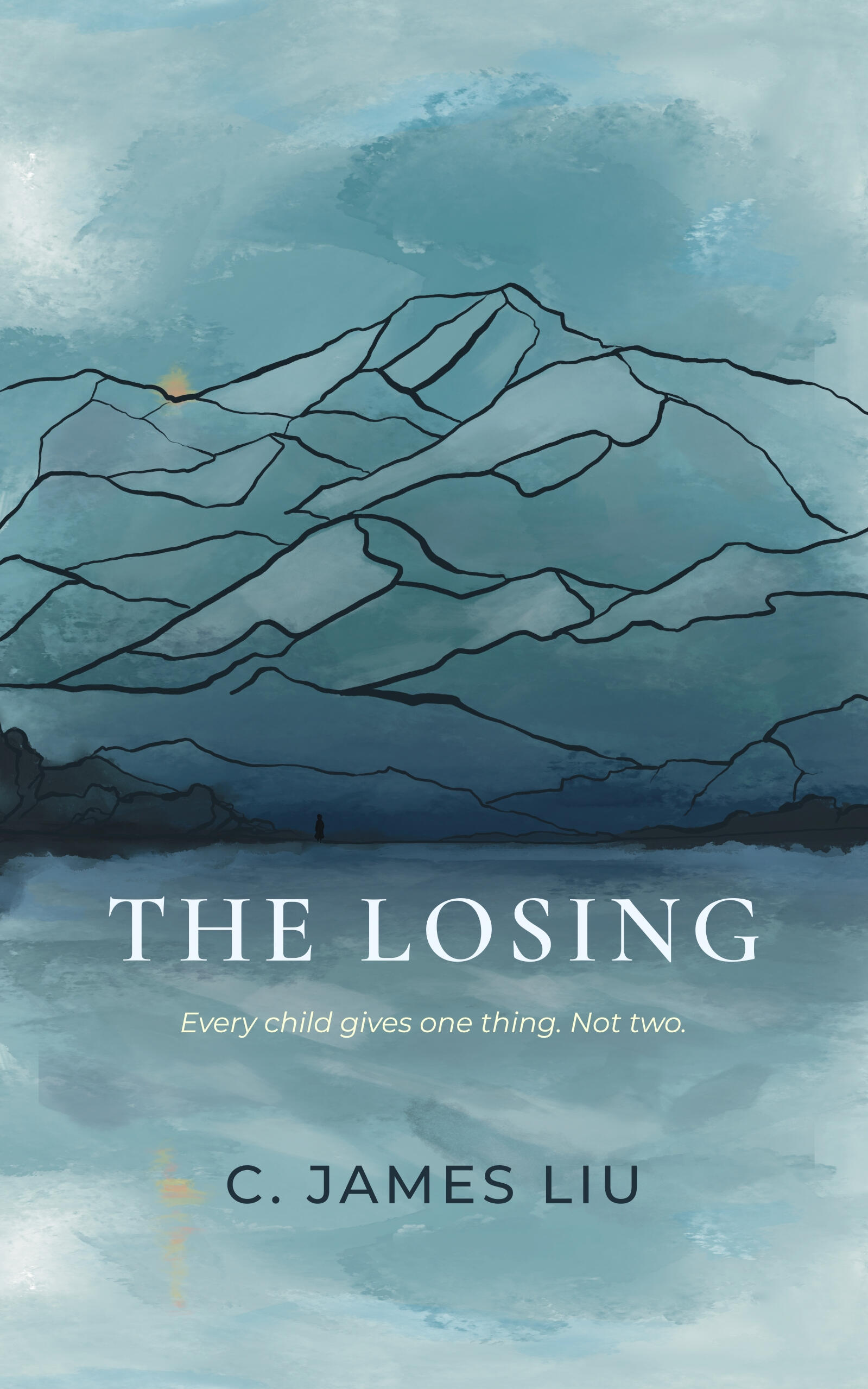
A Novel
The Losing
Your face, or your questions. Every child in the valley gives up one of them by the age of twelve.Stand at the lake when the light breaks across it, and you will never see your own face again. Walk into the dark behind the falls, and you will never again ask why. It is the price of an old bargain, and in return, nobody in the valley dies at sixteen.But what is given can still be found.A girl gave her face, and has looked for it in every window and puddle since she was eleven. A boy gave his asking, and would follow her anywhere without ever needing to know why. Together they set out to find what they have been missing.
Available on Amazon
T
The Tale of the Crossroads
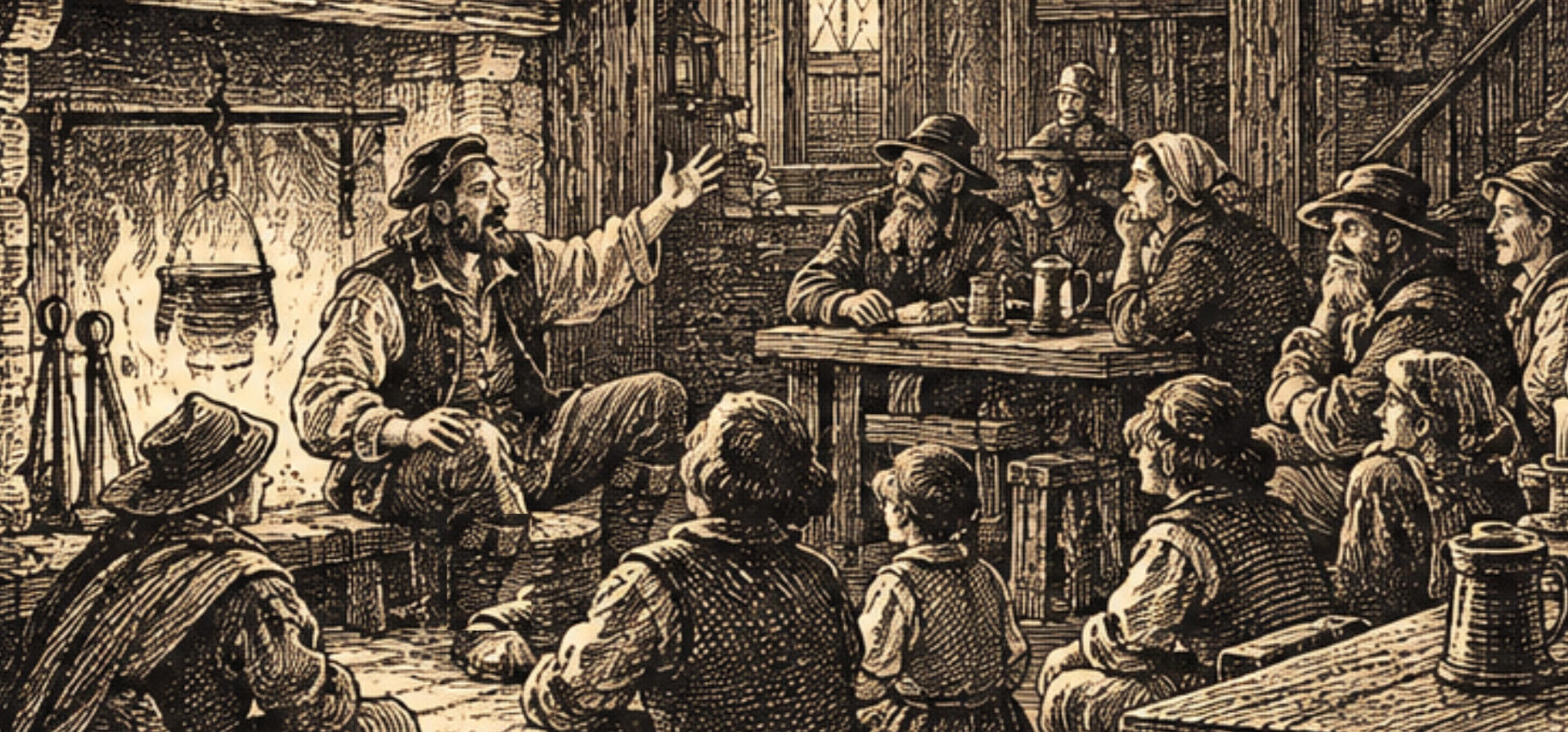
They still talk, in the village at the Crossroads, about the traveller who came through at the end of one harvest and told the strangest story anyone there could remember.It had been a good year, and at the Crossroads that is not a thing anybody says lightly. The ground up there is thin and the winters are long, and most years the harvest is a thing you get through rather than a thing you get. That year the barley stood heavy to the last row. Two calves came in the same month at the top farm and both of them lived. The ale from the brewhouse down the river was the best in living memory, and it was said so by people who had never said anything good about anything.So there was a festival, and there was a feast, and by full dark there was more of the village in the tavern than the tavern had been built to hold.Nobody could say afterwards which road he had come in by. Some said the riverbank path through the wood; others were just as certain he'd come down off the hill road, out of the mountains. What everyone remembered was the well — he stopped there first, drinking out of his hands, and then were not seen again until the fire pit in the tavern.He had the seat in the corner nearest it, with his left leg out straight in front of him, the way a man sits when a leg has stopped bending properly and he has stopped minding. The fire was good and high by the time he got his boots off, and half the village seemed to have packed in at the tables and stools — farmers, workers, housewives, a dozen children who should have been in bed hours ago and knew it. He had a cup of ale, and he was not drinking much of it. He was watching the room the way you would watch a good fire: pleased it was there, and asking nothing of it.It was a girl who started it. She was ten or eleven, sitting on the hearthstone a good deal closer to the fire than anybody had told her she could, and she turned round and said, “Tell us a story,” the way children do, as though it were owed to them.“What?” he said.“You’re not from here, are you?”“No.”“I bet you have good stories to tell.”A few heads turned. There are not many new faces at the Crossroads, and once the pies were gone there was not much else to look at. Somebody put another log on. Somebody else shushed somebody who had not been talking.He looked at her a moment longer than the question needed. She was not going to give up, and by the look of them, neither were the grown-ups.“All right,” he said. “Do you want a strange one?”A few of the children nodded as though their heads might come off."Right, then." He cleared his throat, shifted forward on the bench, and let the firelight fall full across his face. He looked younger than most of the villagers had expected, somehow — though no one there could have said exactly what they'd expected instead. He paused a moment, and then he began.“There’s a place I’ve heard of,” he said. “A long way off. Past more rivers than I’ve got fingers. And in that place every child, somewhere between six years old and twelve, has to make a choice. A real choice. For good. Nobody gets out of it.”“What kind of choice?”“Hold on, I’m getting there.” He looked round the room, as though making sure of everybody. “Every child has to give something up. Forever. If they don’t, they don’t live past sixteen. And they only get to pick one of two things.”“One.” He held up a finger. “They can give up asking why. About anything, ever again.”“Why would anybody give that up?” said a boy at the long table.He grinned. “Funny you should ask. Because that’s the exact thing they’d lose.” A second finger. “Or two. They can give up seeing themselves. Ever again.”That one always landed quiet for a second before it landed loud.“What do you mean, they can’t see themselves?” said a boy near the fire.“That’s what I said, the first time I heard it. Not being able to see yourself! Not in a pond, not in a bucket, not even in a mirror.”“How so? It’s just blank?” said the girl on the hearth. “Where their face ought to be?”“I asked that too,” he said. “Near as I can tell, their face is there, same as anybody’s. They just can’t see it.”Then, for the first time that night, he stopped and looked for the words, as though they belonged to somebody else and he wanted them exactly right.“It isn’t dark. There’s no dark patch. You stand at a window at night with the lamp behind you and the whole room’s in it — the table, the chair, the dog asleep under the chair. Everything exactly where it ought to be. And there’s simply nobody standing there.”“That’s not right,” somebody murmured.“Told you it was strange.”“So what happens to the other ones?” said a girl at the long table. “The ones who can’t ask. Do they go simple?” Her mother swatted her arm, and the room laughed, and he laughed with it.“No. No. Not simple. They’ll do a day’s work better than most of you and never grumble about it. Ask one of them why the bread’s baked the way it is and he’ll tell you how it’s done, every step, and be right about all of it. He just won’t wonder. It won’t itch at him the way it’d itch at you.”“So which is worse?”“That,” he said, “is a thing every grandmother in that place has an opinion on, and not one of them has ever settled it.”An old man at the bar turned round on his stool. “And how do they pick? They let a child of six decide a thing like that?”“They don’t all pick at six. That’s the thing — there’s no set day. Some wake up one morning at seven and just know, the way children sometimes know things, and they’re off to make the choice before breakfast. And some put it off and put it off.” He turned his cup on the board. “Right up to the edge.”“What’s the edge?”“Your twelfth birthday. If you haven’t chosen by the end of it, it gets chosen for you.”“Chosen how?”“That I can’t tell you exactly. Only that it’s always the same — it’s the asking that goes. Always the asking. They say a big child has too much hold of himself to manage the other one.” He shrugged. “That’s what they say.”“Why sixteen, though?” said the boy.“I asked that once. The man I asked had been asking it for sixty years and never got an answer.” He looked at the fire. “It’s a strange thing, for a place like that. Half built on the one question it can’t answer about itself.”Nobody said anything to that. Then low voices went round the tables, and he let the fire do the talking for a while until the room came back to him.“But how does anybody know what it’s like?” said a woman by the door. She had her arms folded and the kind of face that does not take a story on credit. “If the ones who give up the asking don’t miss it, and the ones who give up their faces can’t check. Who’s telling you all this?”He looked at her.“That’s a good question, isn’t it?” he said. “Nobody really knows, I suppose. It’s a story from a long way off.”“But I’ll tell you what I heard.” He paused. “It is believed that everybody around them is who. That’s the only answer I’ve got. A mother knows the day her boy stopped asking why the stew was salty and just started eating round it, even if he never knew it happened. A boy sees his sister glance at a dark window half a breath quicker than she used to, as though somebody had moved behind her, and then her eyes slide off it and she’s forgotten she looked.” He turned the cup a quarter turn on the board. “The one it happens to hardly feels it, most days. It’s the ones who love them who notice. They’re the ones who carry it.”That quieted the room more than anything else had.The girl on the hearth had pulled her knees up. “Has anybody ever tried to get it back?” she said, smaller now. “To undo it?”His hand went to his collar. There was a string round his neck with a white stone on it, and he had been turning it over with his thumb, off and on, all evening.“There’s a rumour,” he said. “There always is. A water somewhere, a long way up, that gives back what the first one took, if you get to it in time.” He let go of the string. “I’ve never met a soul who says they found it.”He let that sit.“Might not be anything in it at all.”“So which would you pick?” said the boy at the long table, bolder now that it was nearly over. “If you had to.”“Me?”“Asking or seeing?”The traveller looked at the fire for a moment before he answered, the way a person does when a question is better than whoever is asking it knows.“Go on,” he said. “All of you. Which would you pick?”That set the whole room off. A farmer’s wife said she would sooner give up her own face than stop asking her husband why he never mends the gate, which got a good laugh. A small boy said he would give up seeing himself because he had never much liked his nose, which got a bigger one. The old man at the bar said that a man who could not ask a question would never have got himself married, and his wife said that was the first sensible thing he had said since the spring. The woman by the door said nothing at all. She only looked at the traveller a beat too long and then looked away.It went on for a good while, half the room arguing it out over the last of the ale, nobody agreeing and nobody meaning to stop. The traveller sat in the middle of it with his leg out and his cup going cold and watched them ask each other things. The ones nearest him said afterwards that he looked as pleased as a man can look without smiling.By morning the traveller was gone, before the village woke, and nobody saw which road he took. They say the argument went on at the Crossroads long after he had gone, and that whenever anyone new came through, somebody would tell them the story too, though never quite the same way twice.-
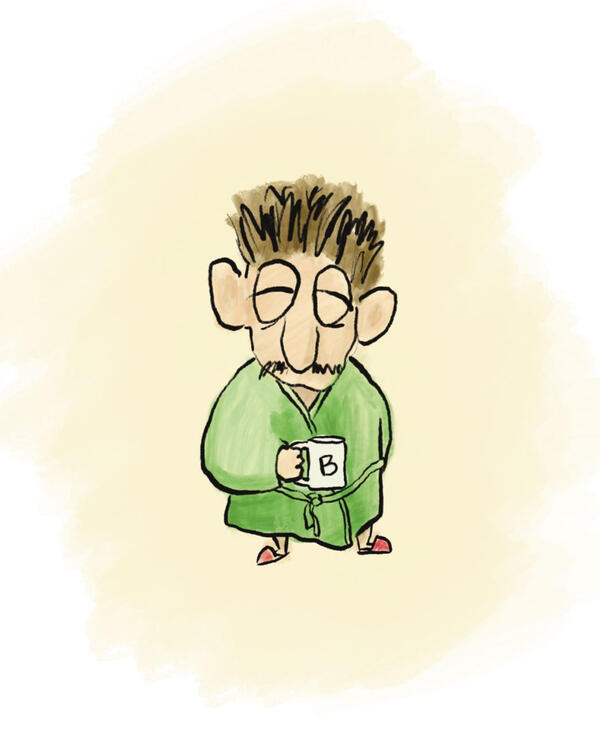
C. James Liu
According to Ellie (7 yrs old), uncle James is a true artist. He writes novels and children's books, and he makes big paintings and illustrations. He also sits a lot and sleep a lot, and he is always drinking coffee and laughing. He enjoys playing Tomica cars and Plarail trains in his free time.
THE BARGAIN IS WAITING
Every child gives one thing
What would you give?
© 2026 C. James Liu. All rights reserved.
LoreRidge Press